
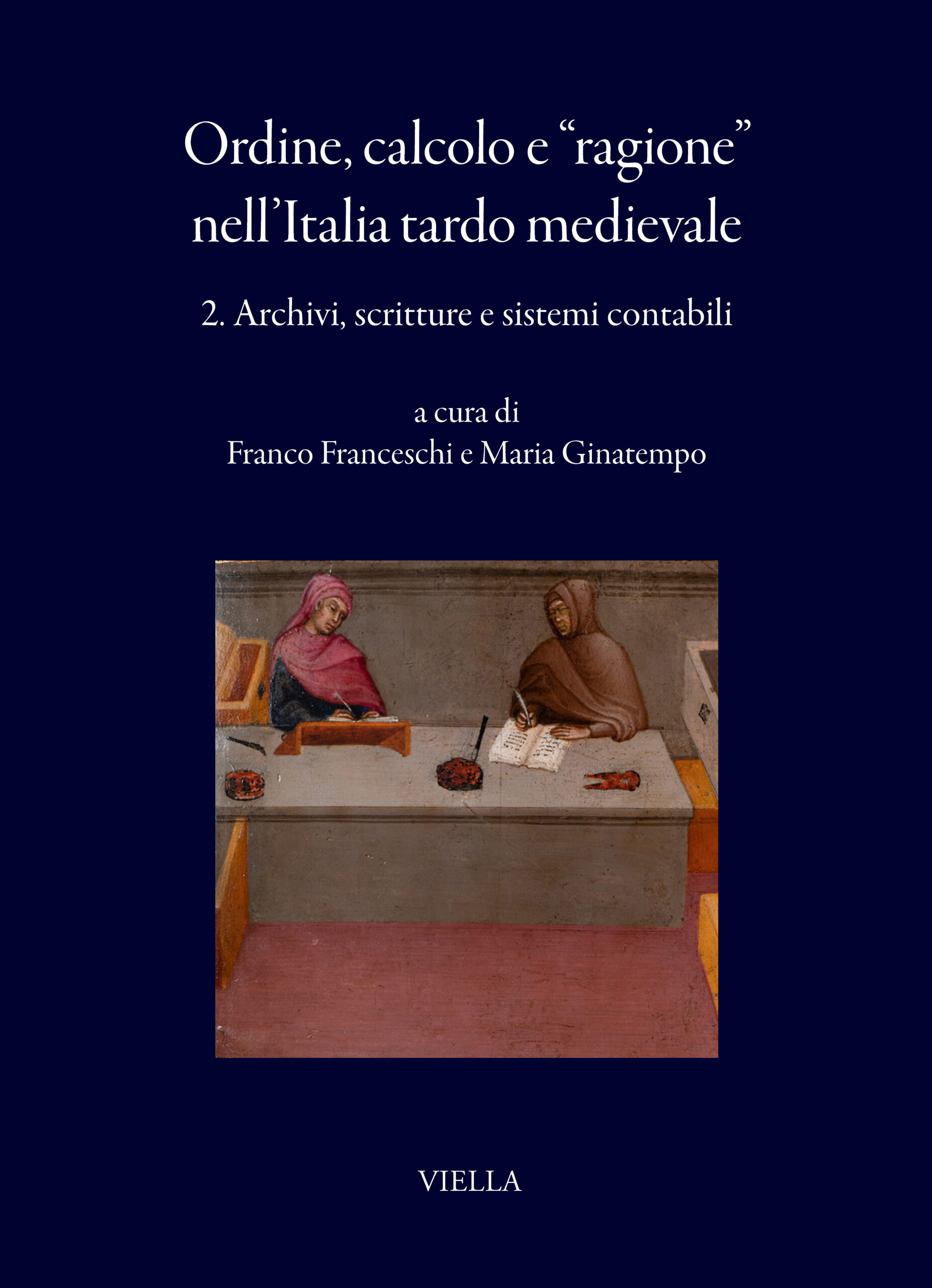
The volumeOrder, calculation and “ragione” in late medieval Italy 2. Archives, records and accounting systems, edited by Franco Franceschi and Maria Ginatempo, explores administrative and accounting management in late medieval Italy, with a specific focus on the evolution of archives and reporting systems.
The Royal Prosecutor’s Office of the Kingdom of Sardinia
Giuseppe Seche’s essay fits into this context,Archives and management of the royal heritage through the registers of the Royal Prosecutor’s Office of the Kingdom of Sardinia in the 15th century, which analyzes in detail, by crossing institutional reconstruction with a rigorous analysis of documentary history, the Royal Prosecutor’s Office of the Kingdom of Sardinia in the 15th century, an institution created on 1 June 1413 to administer the rights and assets of the Crown on the island, with economic, fiscal, financial, administrative and judicial competences.
The author uses the sources to reconstruct not only the activities, but also the complex documentary history of this judiciary.
The records held in the Antico Archivio Regio
What remains of his archive is currently deposited at the State Archives of Cagliari, within the miscellaneous superfond called Antico Archivio Regio, containing the documentation relating to the pre-unification states.
The identification of documentary series
Particularly valuable for those who want to approach the knowledge of this institution is the work carried out by Seche on the identification of the series, which focused on the BC (Procurement) and BD (Arrendaments), the result of a systematic examination and regestation which also went as far as the analysis of glosses and marginal notes which testify to the active administrative use of the registers in the 15th century.
The virtual recovery of the archival constraint
Particularly qualifying and heralding new perspectives are the proposals for the virtual recovery of the archival constraint and the reconstitution of the order among the papers produced by the Prosecutor’s Office, partially lost following the classification operations by subject of the eighteenth century.